The Incomplete Medication History: How Over-the-Counter Drug Use Silently Undermines Your Clinical Strategy
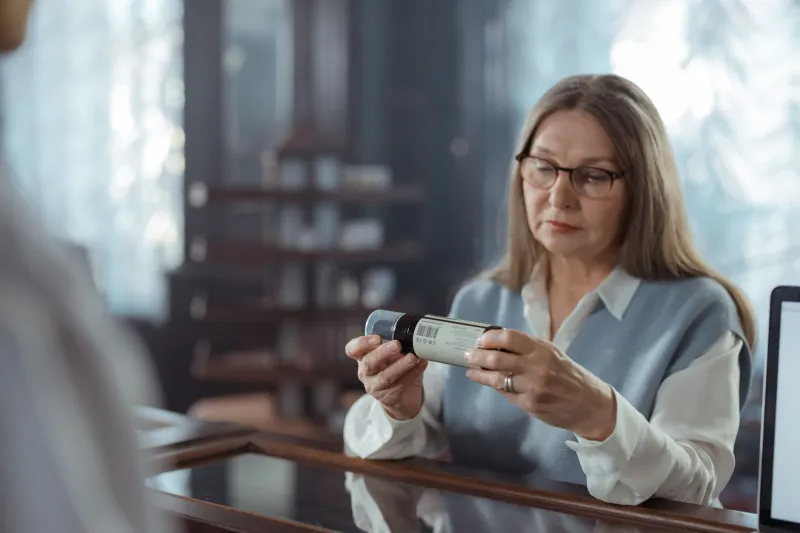
There is a quiet assumption embedded in most clinical encounters: that the medication list a patient recites—or the one pulled from an electronic health record—represents the totality of what that patient is actually consuming. In practice, this assumption is routinely wrong. Ibuprofen purchased at a grocery store, a melatonin supplement grabbed from the pharmacy endcap, a daily aspirin self-initiated years before the current provider relationship began—none of these appear on most intake forms, and few clinicians ask about them with the same rigor applied to prescription drugs.
The consequences of that gap are not trivial. Over-the-counter (OTC) medications are pharmacologically active agents. They bind receptors, alter enzyme activity, compete for plasma protein binding sites, and interact with metabolic pathways in ways that are clinically indistinguishable from the interactions caused by prescription drugs. Treating them as categorically different—simply because they do not require a prescription—is a regulatory distinction, not a pharmacological one.
Why Patients Don't Volunteer the Information
Understanding the root of this problem requires appreciating how patients conceptualize the word "medication." Research consistently demonstrates that many patients interpret the question "What medications are you taking?" as applying exclusively to drugs prescribed by a physician. OTC products, in their mental model, belong to a separate category—closer to food or self-care than to medicine. This is not evasiveness; it reflects a deeply held cultural framework reinforced by marketing, packaging, and the very act of purchasing these products without a prescription.
Beyond conceptual framing, there is also an element of omission by oversight. A patient managing chronic low back pain may take ibuprofen so habitually that it no longer registers as a deliberate pharmacological decision. Someone using a daily antihistamine for seasonal allergies may genuinely not consider it relevant to a cardiology follow-up. The medication has become invisible through familiarity.
Finally, some patients deliberately withhold OTC use, anticipating judgment or a directive to discontinue something they find effective. This is particularly common with herbal preparations, weight-loss products, and sleep aids—categories that carry social weight and personal significance beyond their pharmacological profiles.
The Highest-Risk Combinations in Practice
Not all OTC medications carry equivalent interaction risk, and clinicians benefit from maintaining a working awareness of the combinations most likely to produce adverse outcomes or therapeutic failure.
NSAIDs and antihypertensives represent one of the most prevalent and underappreciated collisions in outpatient practice. Ibuprofen and naproxen—both available OTC at doses that are pharmacologically meaningful—can blunt the efficacy of ACE inhibitors, angiotensin receptor blockers, and diuretics through prostaglandin-mediated mechanisms. In patients whose blood pressure appears refractory to a seemingly appropriate regimen, OTC NSAID use deserves early consideration in the differential.
NSAIDs and anticoagulants compound hemorrhagic risk through complementary mechanisms: platelet inhibition combined with anticoagulation and, in some cases, gastrointestinal mucosal injury. This combination is particularly dangerous in older adults, who are disproportionately represented in both NSAID-using and anticoagulated populations.
Proton pump inhibitors and clopidogrel present a subtler but well-documented interaction. OTC omeprazole—widely used for heartburn self-management—is a meaningful inhibitor of CYP2C19, the primary metabolic pathway for clopidogrel's conversion to its active form. Patients on dual antiplatelet therapy who self-initiate OTC omeprazole may be inadvertently attenuating their antiplatelet protection without any clinician awareness.
Diphenhydramine and CNS-active prescriptions create additive sedation and anticholinergic burden, a particular hazard in older patients already receiving medications with anticholinergic properties. The OTC sleep aids and antihistamines containing diphenhydramine are ubiquitous, inexpensive, and frequently used without disclosure.
Calcium and thyroid medications illustrate a different category of interaction—absorption interference rather than metabolic competition. Patients taking levothyroxine who also use calcium-containing antacids or supplements within a narrow time window can experience clinically significant reductions in thyroid hormone absorption, contributing to what appears to be inadequate dose response.
Structural Failures That Perpetuate the Problem
The clinical infrastructure of most US outpatient practices does not systematically support OTC medication capture. Intake forms frequently ask patients to list "current medications" without specifying that OTC drugs, vitamins, and supplements are included. Electronic health record medication reconciliation workflows are largely built around prescription data drawn from pharmacy benefit managers and e-prescribing histories—sources that, by definition, do not capture OTC purchases.
Time pressure in clinical encounters compounds the problem. When a prescriber has twelve minutes to address a patient's chief complaint, adjust a chronic disease regimen, and complete documentation, a thorough OTC inventory rarely survives prioritization. The result is a medication safety profile that is systematically incomplete across an enormous proportion of patient encounters.
Building a Structured OTC Capture Process
Addressing this gap does not require a wholesale redesign of clinical operations. Targeted, incremental changes to intake processes can yield substantial improvements in medication history completeness.
Revise intake language explicitly. Intake forms and pre-visit questionnaires should name OTC categories directly—pain relievers, antacids, allergy medications, sleep aids, vitamins, and herbal or dietary supplements. Patients who would not think to list ibuprofen under "medications" will often identify it accurately when the category is named.
Train and delegate. Medical assistants and nursing staff conducting rooming interviews can be trained to ask a structured OTC question as part of the standard intake sequence. This distributes the data-gathering function and preserves prescriber time for clinical interpretation rather than inventory collection.
Prompt at therapeutically critical moments. Rather than attempting comprehensive OTC review at every encounter, identify the clinical contexts where OTC interactions carry the highest stakes—anticoagulation management, antihypertensive optimization, thyroid hormone titration—and build targeted OTC prompts into those specific workflow touchpoints.
Document in a discoverable location. OTC medications that are identified should be recorded in a section of the EHR that is visible during prescribing decisions, not buried in a visit note. If the information is captured but not surfaced at the point of prescribing, its clinical value is largely lost.
Close the loop at prescription initiation. When initiating a new prescription, particularly one with known OTC interaction risk, explicit counseling about which OTC products to avoid or use with caution is both a safety measure and an opportunity to elicit disclosure. Patients who learn that ibuprofen may affect their new blood pressure medication often volunteer that they take it regularly—information they would not have offered unprompted.
Reframing the Clinical Obligation
The OTC medication history is not a bureaucratic formality. It is a foundational component of the medication safety assessment, and its systematic neglect represents a structural vulnerability in clinical practice that affects patient outcomes in ways that are rarely attributed to their actual cause. When a patient's blood pressure fails to respond to a guideline-directed regimen, when an anticoagulated patient presents with unexpected bleeding, when thyroid function tests suggest inadequate replacement despite dose escalation—the invisible OTC layer deserves a prominent place in the diagnostic reasoning.
Precision prescribing, by definition, requires a complete picture of what a patient is consuming. Anything less is prescribing against an incomplete dataset—and the clinical results will reflect that incompleteness, whether or not the cause is ever identified.